Most people feel little or no pain during dental implant surgery. Your mouth is fully numbed, so you should feel pressure and vibration but not sharp pain. Afterwards, expect some soreness for a few days. It is usually worse on the first day and can generally be managed with everyday pain relief from the chemist.
How much discomfort you feel depends on how the implant is placed, how many implants you have at once, and how well you follow your aftercare. This article explains what to expect before, during and after treatment.
Quick answers
-
Does it hurt during the procedure? Usually not, because the area is fully numbed.
-
How sore will I be afterwards? Expect some soreness and swelling. The first day is usually the worst, then it eases.
-
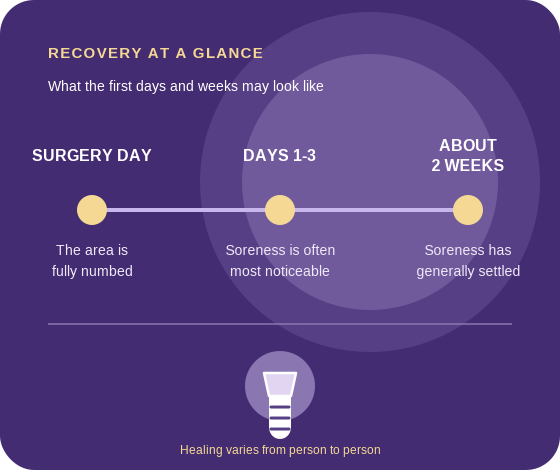
How long does the soreness last? It usually peaks in the first three days and has generally settled within about two weeks.
-
What helps most? Taking pain relief at regular times for the first few days, cold packs, soft food and rest.
-
Is having several implants at once more painful? Usually, yes. More implants means more healing, so expect more soreness.
-
When should I call my dentist? If pain or swelling gets worse after day three, or you notice bleeding that won’t stop, a fever or pus.
What happens during implant placement
A dental implant is a small titanium screw that replaces the root of a missing tooth. Placing it is a minor surgical procedure, usually done in the dental chair.
In simple terms, the dentist:
-
Numbs the area thoroughly so you don’t feel pain.
-
Reaches the jawbone, either by opening the gum or by working through a small hole (more on this below).
-
Carefully prepares a small space in the bone for the implant.
-
Gently places the implant.
-
Closes the gum with stitches, or leaves a healing cap showing. This is a small metal cap on top of the implant that helps the gum heal in the right shape.
A single, straightforward implant often takes about an hour. Most soreness afterwards comes from the gum and the thin, sensitive layer covering the bone, not from the implant itself. That’s why the way the gum is handled makes such a difference to how you feel later.
Pain management options during the procedure
Almost every implant is placed under local anaesthetic, which blocks pain in the area being treated. If you feel nervous, sedation can be added on top to help you relax. Sedation calms you; the local anaesthetic is what stops the pain, so you will usually have both.
| Option | How it works | How you’ll feel |
|---|---|---|
| Numbing gel | A gel rubbed on the gum before the injection | The needle feels like a small pinch, or not at all |
| Local anaesthetic | An injection that numbs the tooth, gum and bone in that area | Awake and comfortable. You’ll feel pressure, vibration and hear the instruments, but not sharp pain |
| Happy gas (nitrous oxide) | You breathe a gas mix through a small mask over your nose | Relaxed, light and calm. It wears off within minutes of the mask coming off |
| Oral sedation | A calming (sedative) tablet taken before your appointment | Drowsy and relaxed. You may remember little of the visit |
| IV sedation (through a drip) | Calming medicine given through a small drip into a vein in your arm or hand, by a trained dentist or anaesthetist | Deeply relaxed, often barely aware of the procedure, and you’ll remember little |
| General anaesthetic | You’re put fully to sleep by an anaesthetist, usually in a hospital or day-surgery centre | Asleep for the whole procedure |
A few practical points:
-
Tell your dentist if you’re nervous. That way, they can plan the right sedation for you from the start and help you feel calm and comfortable throughout.
-
Plan your trip home. After oral sedation, IV sedation or a general anaesthetic, you’ll need a responsible adult to take you home and stay with you. You shouldn’t drive, work or sign important documents for at least 24 hours.
-
The numbness lasts a while. Your lip, cheek or tongue may stay numb for a few hours after you leave. Take care not to bite them, and avoid hot drinks until the feeling comes back.
How long will it hurt?
Here’s what most people can expect, from the day of surgery until the new tooth (the crown) is fitted.

What can prolong discomfort after the procedure
-
Having the gum folded back to reach the bone (gum flap surgery)
-
Having several implants placed at once
-
Bone grafting (building up jawbone that is too thin to hold an implant)
Gum flap vs guided implant surgery
There are two common ways to place an implant. Both are routine, and both are done with the area fully numbed. The main difference is how quickly the gum heals afterwards. Your dentist will recommend the approach that suits your mouth.
Gum flap surgery
The dentist gently folds back a small section of gum to see the bone clearly, then stitches it back in place once the implant is in. This is often the best choice if you need bone grafting. Healing may take a little longer, but any soreness can usually be managed at home.
Guided surgery
Your dentist uses a 3D scan to plan exactly where the implant will go, then makes a custom guide that fits over your teeth like a stencil. The implant is placed through a small opening, so fewer stitches are usually needed and healing is often quicker. It suits people with enough healthy bone and gum.
How they compare

Stitches and gum healing: what to expect
Stitches (also called sutures) hold the gum in place while it heals. They can cause some mild niggles, which usually settle within one to two weeks.
-
Dissolvable stitches fall out on their own within one to two weeks.
-
Non-dissolvable stitches are removed at a quick follow-up visit, usually 7 to 14 days after surgery. Most people feel only a slight tug.
What’s normal in the first few days
-
A tight or pulling feeling, and loose threads that tickle your tongue
-
Tenderness when you touch the area or chew nearby
-
A white or pale yellow layer over the wound. This is normal healing tissue, not infection
-
Pink-tinged saliva on the first day
-
Swelling that builds for two to three days, and sometimes bruising on the cheek or jaw that fades over a week or two
Looking after your stitches
-
Don’t poke them with your tongue or fingers, or pull at loose threads.
-
Avoid brushing directly over them until your dentist says it’s okay, but keep brushing your other teeth.
-
If you wear a denture over the area, ask your dentist when it’s safe to wear it.
One implant vs several implants in one visit
Having several implants placed in one visit usually means more soreness in the recovery period, for four main reasons:
-
More areas are healing at once. Each implant site has its own gum opening, bone preparation and, often, its own stitches. Your body has more to repair, so there is more inflammation.
-
The appointment takes longer. You’ll need to keep your mouth open for longer, which can leave your jaw feeling a little tired or stiff afterwards.
-
Swelling covers a bigger area. If implants are placed on both sides of the mouth, there may be no comfortable side to chew on for a few days.
-
Extra steps are more likely. Multiple implants often go hand in hand with tooth removal or bone grafting, and each adds its own soreness.
Pain relief after treatment
For most people, regular doses of everyday pain relief from the chemist, plus cold packs and rest, are enough to stay comfortable. The key is to stay ahead of the pain rather than waiting for it to build.
Timing matters
Pain often peaks a few hours after surgery, around the time the anaesthetic wears off. Your dentist will recommend the pain relief that suits you best.
To stay ahead of the pain:
-
Take your first dose of pain relief before the numbness wears off, as your dentist advises.
-
For the first two to three days, keep taking it at regular times rather than waiting until it hurts. Always follow the dose and timing instructions on the packet.
-
Cut back gradually as the soreness settles.
Other ways to ease discomfort
-
Cold packs. For the first 24 to 48 hours, hold a cold pack wrapped in a cloth against your cheek for 15 to 20 minutes at a time, then take a break. This helps limit swelling.
-
Rest with your head raised. Use an extra pillow for the first couple of nights, and avoid heavy exercise for a few days.
-
Soft, cool foods. Think yoghurt, scrambled eggs, soup (not too hot), mashed vegetables and smoothies. Avoid hard, crunchy, spicy or very hot foods, and chew away from the implant.
-
Warm salt water rinses. From the day after surgery, gently rinse a few times a day, especially after meals, unless your dentist says otherwise. Don’t swish hard.
-
Avoid smoking and alcohol. Both have been linked to more pain and discomfort after implant surgery, and smoking also slows healing.
-
Follow your aftercare sheet. If your dentist has prescribed a mouthwash or antibiotics, use them exactly as directed.
When to call your dentist
Some soreness, swelling and bruising is a normal part of healing. Problems are uncommon, but it’s important to know what to look out for. Contact your dentist promptly if you notice any of the following:
-
Pain that gets worse after the third day instead of better, or that pain relief doesn’t control
-
Bleeding that doesn’t stop after 30 minutes of firm pressure on a folded gauze pad
-
Swelling that keeps growing after the third day
-
A fever, chills or feeling generally unwell
-
Pus, a foul taste or a bad smell coming from the area
-
Numbness or tingling in your lip, chin or tongue that is still there the day after surgery
-
An implant or healing cap that feels loose
If you have trouble breathing or swallowing, or swelling spreads quickly towards your eye or neck, call 000 or go to your nearest emergency department.
Questions to ask your dentist
Bring these to your consultation so you know exactly what to expect:
-
Will my implant be placed with gum flap surgery or guided surgery, and why?
-
Will I need bone grafting?
-
Which pain management or sedation options do you offer, and which would suit me?
-
If I need several implants, should they be done all at once or in stages?
-
How much time off work should I plan for?
-
Which pain relief should I take, and when should I take the first dose?
-
Will my stitches dissolve, or do I need to come back to have them removed?
-
Who do I contact if I have a problem after hours?
If you’re worried about pain, talk to your dentist before treatment. They can explain which approach and pain management options suit you, so you know exactly what to expect.