Most dental implants last well over a decade, and many last for the rest of a person's life. However, how long yours lasts depends largely on your health and how you look after it.
This article explains what the research says about implant lifespan, and the main reasons implants sometimes fail.
On this page
What is a dental implant?
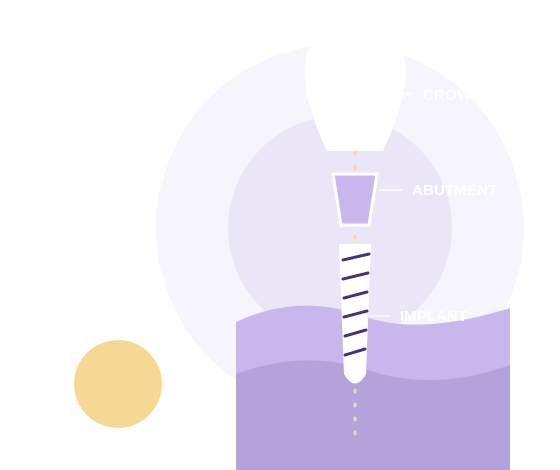
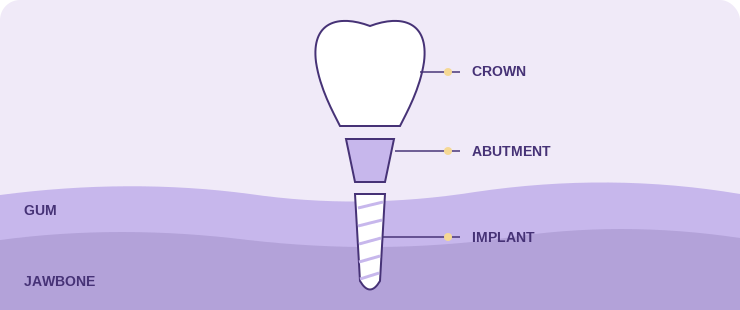
A dental implant is a replacement for the root of a missing tooth. It is a small screw, usually made of titanium, that a dentist places into your jawbone. A crown (the part that looks like a tooth) is then attached on top.
The short answer: what the research says
Simply, about 93 to 96 out of every 100 implants are still in place after 10 years.
But newer research shows two catches:
-
Over 20 years, and once patients who dropped out of the studies are taken into account, the figure can drop to about 78 out of 100.
-
The implant that is still in place is not always a healthy one, which is why good cleaning and regular check-ups matter so much.
The implant and the crown age differently
The tooth-like crown takes the daily wear of chewing, so it may need replacing after 10 to 15 years. Replacing a crown is a much smaller job than replacing the implant itself.
Why implants fail: pathological factors
Pathological factors are diseases or health conditions in the body that make it harder for an implant to settle in or stay healthy.
Peri-implantitis (gum disease around the implant). This is the most common reason implants fail in the long run. Bacteria build up around the implant, causing the gum and other supporting tissues to become inflamed. Over time, this inflammation causes the bone around the implant to wear away. A large review by Derks and Tomasi (Journal of Clinical Periodontology, 2015) estimated that around 1 in 5 people with implants develop it at some point. It often causes no pain early on, which is why check-ups matter.
The bone not bonding with the implant. Sometimes the jawbone never grows firmly around the implant in the first few months. This is called early failure. It can happen because of infection, too little bone, or the implant moving before it has healed.
A history of gum disease. People who lost teeth to gum disease (periodontitis) are more likely to develop the same problem around their implants. The bacteria and the body's response to them are still there.
Diabetes that is not well controlled. High blood sugar slows healing and makes infections more likely. Research suggests that people whose diabetes is well managed generally do well with implants.
Weak bone and certain medicines. Conditions such as osteoporosis, and some medicines used to treat it, can affect how bone heals. Always tell your dentist about every medicine you take.
Radiotherapy to the head or neck. Radiation treatment for cancer can reduce blood supply to the jawbone, which raises the risk of failure. Implants are still possible but need careful planning.
Why implants fail: external factors
External factors are habits and choices, many of them within your control.
Poor oral hygiene. An implant cannot decay like a natural tooth, but the gum and bone around it can still get infected. If plaque is left to build up, it can lead to peri-implantitis and, over time, loss of the implant. Brushing twice a day and cleaning between teeth is just as important with implants as without.
Missing regular maintenance check-ups. Problems around implants often start silently. Regular visits let a dentist or hygienist clean areas you can't reach and spot early signs of trouble. In a five-year study of 80 people who already had gum inflammation around their implants, about 18% of those who received regular preventive care developed peri-implantitis, compared with about 44% of those who did not. See the study.
Smoking. Smoking reduces blood flow to the gums and slows healing. A review by Chrcanovic, Albrektsson and Wennerberg (Journal of Dentistry, 2015) found that smokers' implants failed roughly twice as often as non-smokers'. Vaping and heavy drinking may also slow healing.
Teeth grinding and clenching (bruxism). Grinding puts heavy, repeated force on the implant and crown. This can loosen screws, crack crowns, or overload the bone. A night guard can help protect the implant.
Biting hard objects. Using teeth to open packets, chewing ice, or biting pens can chip or crack a crown.
Warning signs and how to make your implant last
Contact your dentist promptly if you notice any of these:
Gums around the implant that bleed, swell, or look red
Pus, a bad taste, or bad breath that won't go away
The implant or crown feels loose or moves
Pain or discomfort when chewing
Gums shrinking back so the metal shows
To give your implant the best chance of lasting a lifetime:
Brush twice a day and clean between your teeth and around the implant every day, using floss, interdental brushes, or a water flosser.
Keep up regular check-ups and professional cleanings, as often as your dentist recommends.
Stop smoking, ideally before treatment begins.
Wear a night guard if you grind or clench your teeth.
Keep health conditions such as diabetes well managed, and tell your dentist about any changes in your health or medicines.
The bottom line
Dental implants are one of the most reliable treatments in dentistry, with about 93% to 96% still in place after 10 years and roughly 78% to 92% after 20 years, depending on how the figures are counted. Some failures come from health conditions you can't fully control, but many come from things you can: cleaning well, going to check-ups, and not smoking. Look after your implant, and there is a good chance it will look after you for decades.
References
-
Howe MS, Keys W, Richards D. Long-term (10-year) dental implant survival: a systematic review and sensitivity meta-analysis. Journal of Dentistry. 2019;84:9–21.
-
Moraschini V, et al. Ten years and beyond: Long-term dental implant survival, success, and biological health: A systematic review and meta-analysis. Periodontology 2000. Published online 13 October 2026. DOI 10.1111/prd.70098.
-
Kupka JR, König J, Al-Nawas B, Sagheb K, Schiegnitz E. How far can we go? A 20-year meta-analysis of dental implant survival rates. Clinical Oral Investigations. 2024;28(10):541. DOI 10.1007/s00784-024-05929-3.
-
Chappuis V, Buser R, Brägger U, Bornstein MM, Salvi GE, Buser D. Long-term outcomes of dental implants with a titanium plasma-sprayed surface: a 20-year prospective case series study in partially edentulous patients. Journal of Dental Research. 2013;92(12 Suppl):195S–201S.
-
Derks J, Tomasi C. Peri-implant health and disease: a systematic review of current epidemiology. Journal of Clinical Periodontology. 2015;42(Suppl 16):S158–S171.
-
Costa FO, Takenaka-Martinez S, Cota LO, Ferreira SD, Silva GL, Costa JE. Peri-implant disease in subjects with and without preventive maintenance: a 5-year follow-up. Journal of Clinical Periodontology. 2012;39(2):173–181.
-
Chrcanovic BR, Albrektsson T, Wennerberg A. Smoking and dental implants: a systematic review and meta-analysis. Journal of Dentistry. 2015;43(5):487–498.